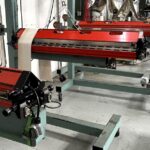




Flat belts have been used to transfer mechanical power for generations, and they are still a practical choice for many industries and equipment. Running between pulleys, these belts transfer power from one rotating shaft to another.
The basic idea is simple, but flat belts are not one-size-fits-all. Different materials and constructions offer different levels of strength, flexibility, grip, and durability.
Vaughn Belting offers several types of flat power transmission belts, making it possible to match the belt to the machinery and the job it needs to do.
What Are Flat Belts for Power Transmission Systems?
Flat belts are flexible belts with a wide, flat surface that runs over pulleys. As one pulley turns, friction moves the belt and transfers that motion to another pulley.
This makes flat belts a type of power transmission belt, rather than a conveyor belt. Conveyor belts move products or materials, while flat power transmission belts transfer mechanical power within machinery.
How Do Flat Power Transmission Belts Work?
A flat belt connects two or more pulleys in a power transmission system. The basic process works like this:
- One pulley receives power from the machinery and rotates.
- Friction between the pulley and belt moves the belt.
- The moving belt transfers power to another pulley.
- The second pulley turns the connected shaft or component.
Proper tension and alignment help keep that transfer consistent. Too little tension can cause slippage, while poor alignment can lead to uneven wear.
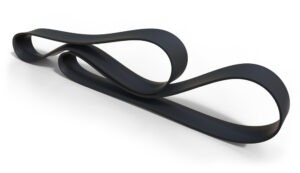
Most Common Types of Flat Belts in Power Transmission
The right flat belt depends on what the machinery requires. Vaughn Belting offers several constructions, including nylon core, leather, aramid fiber-reinforced, Quickmelt, and rubber/polyester-reinforced belts.
| Flat Belt Type | Construction | Key Characteristics |
| Nylon Core | Nylon core with rubber or leather covering | Strength, durability, flexibility |
| Leather | Single or double oak tan leather | Natural strength and flexibility |
| Aramid Reinforced | Aramid fiber reinforcement | High tensile strength and load capacity |
| Quickmelt | Quick-melting design | Fast installation and splicing |
| Rubber/Polyester Reinforced | Rubber with polyester reinforcement | Strength, flexibility, resistance |
The differences between these belt types come down to how they are constructed and what that construction is designed to provide.
Nylon Core Flat Belts
Nylon core belts have a strong nylon foundation with either a rubber or leather cover. The cover changes how the belt performs at the pulley, while the nylon core provides the underlying strength.
Rubber-covered nylon core belts combine nylon strength with a rubber cover for grip and durability.
Leather-covered nylon core belts pair the same strong nylon foundation with a leather cover for a durable, flexible construction.
This gives equipment operators two options within the same basic belt construction, depending on the system’s requirements.
Leather Flat Belts
Leather remains a useful flat belt material because it offers a combination of natural strength and flexibility. Vaughn offers these belts in both single and double constructions.
A single oak tan leather belt provides dependable power transmission when one layer is appropriate for the machinery. Double leather belts add another layer, increasing power transmission capacity for applications with greater demands.
The choice between the two depends on the equipment’s power and load requirements. More belt material is not automatically better if the machinery doesn’t require it.
Aramid Fiber Reinforced Flat Belts
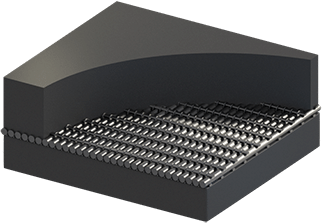
Aramid fiber-reinforced belts are great for applications where strength and load capacity are especially important. Aramid fibers provide high tensile strength, allowing the belt to handle demanding loads without simply relying on a heavier belt construction.
For machinery that places substantial tension on the belt, this added reinforcement can make aramid fiber a useful option.
Quickmelt Flat Belts
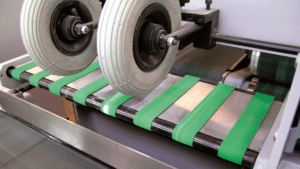
Quickmelt belts focus on one practical concern: faster installation and splicing. Their quick-melting construction is designed to make joining the belt simpler and more efficient.
That can be especially useful when equipment downtime needs to be kept short. Instead of spending unnecessary time on belt replacement, maintenance crews can use a component designed with quicker splicing in mind.
Rubber or Polyester Reinforced Flat Belts
Vaughn’s rubber- and polyester-reinforced, or Tan Transmission, flat belts combine a flexible rubber construction with polyester reinforcement.
The rubber provides flexibility and resilience, while the polyester reinforcement adds strength. Together, they create a flat belt that can flex around pulleys while still providing the reinforcement needed for dependable power transmission.
Typical Uses for Flat Power Transmission Belts
Flat power transmission belts are used in industrial machinery and manufacturing equipment where mechanical power needs to move between rotating components.
They can be a good fit for systems that require:
- Power transfer between shafts
- Flexible movement around pulleys
- A specific combination of strength and flexibility
- Reliable operation in a particular set of conditions
The machinery itself should guide the selection. A high-load production machine may need a very different belt from equipment where flexibility or quick installation is the bigger concern.
How to Choose the Right Flat Belt for Your Power Transmission System
Choosing the right flat belt starts with the machinery, not the belt catalog. Look at how the system runs, what the belt has to handle, and how it will be installed and maintained.
1. Match the Belt to the Load
Start with the amount of power the belt must transmit and the tension it will experience.
Consider:
- How much power the belt needs to transfer
- The load placed on the belt during operation
- Whether additional reinforcement is needed
For example, machinery that places substantial tension on the belt may benefit from an aramid fiber-reinforced construction rather than a belt designed for lower loads.
2. Account for Speed & Operating Conditions
Speed, operating time, and surrounding conditions can all affect belt performance. A belt running continuously on production equipment will experience different demands than one used for short, intermittent runs.
Temperature matters, as well. Before choosing a belt, consider how hot or cold the
equipment and surrounding environment become during normal operation.
For example, a belt running for hours at a time on a production machine needs to be selected with endless operation in mind, rather than based only on whether its dimensions fit the pulley.
3. Choose the Right Belt Material
Different flat belt materials provide different characteristics. Leather offers natural flexibility and strength. Nylon provides a strong core, while rubber and polyester can provide a combination of flexibility and reinforcement. Aramid adds high tensile strength when greater load capacity is needed.
Vaughn’s different constructions make it possible to choose based on what matters most to the machinery rather than relying on a single belt material for every job.
4. Consider the Pulley and System Layout
The belt also has to work with the full power transmission system. Pulley size, belt path, available space, alignment, and tension can all affect belt performance.
For example, a belt that has to make frequent, tight turns around smaller pulleys may have different flexibility requirements from one running around larger pulleys in a more open system.
Proper alignment is important, too. If the pulleys are not lined up correctly, the belt can wear unevenly and may not maintain consistent contact with the pulley surfaces.

5. Plan for Installation & Splicing
Think about how the belt will be installed before making a final selection. If a belt needs to be joined on-site or replaced quickly, the splicing method can have a direct impact on maintenance time.
Vaughn’s Quickmelt flat belts are designed for faster, straightforward installation and splicing, making them an option when minimizing downtime is a priority.
Find the Best Flat Power Transmission Belt with Vaughn Belting
Selecting a flat belt is ultimately about matching the belt to the machinery. The right combination of material, reinforcement, flexibility, and construction can help maintain reliable power transfer while reducing unnecessary wear and maintenance.
Vaughn Belting offers a range of flat power transmission belts, including nylon core, oak tan leather, aramid fiber-reinforced, Quickmelt, and rubber/polyester reinforced Tan Transmission belts.
Not sure which construction fits your equipment? Vaughn Belting can help you evaluate your power transmission needs and find a flat belt suited to your machinery, operating conditions, and maintenance requirements. Contact Vaughn Belting today to get started.